Drawout vs Fixed MCC: How to Choose (with Checklist)

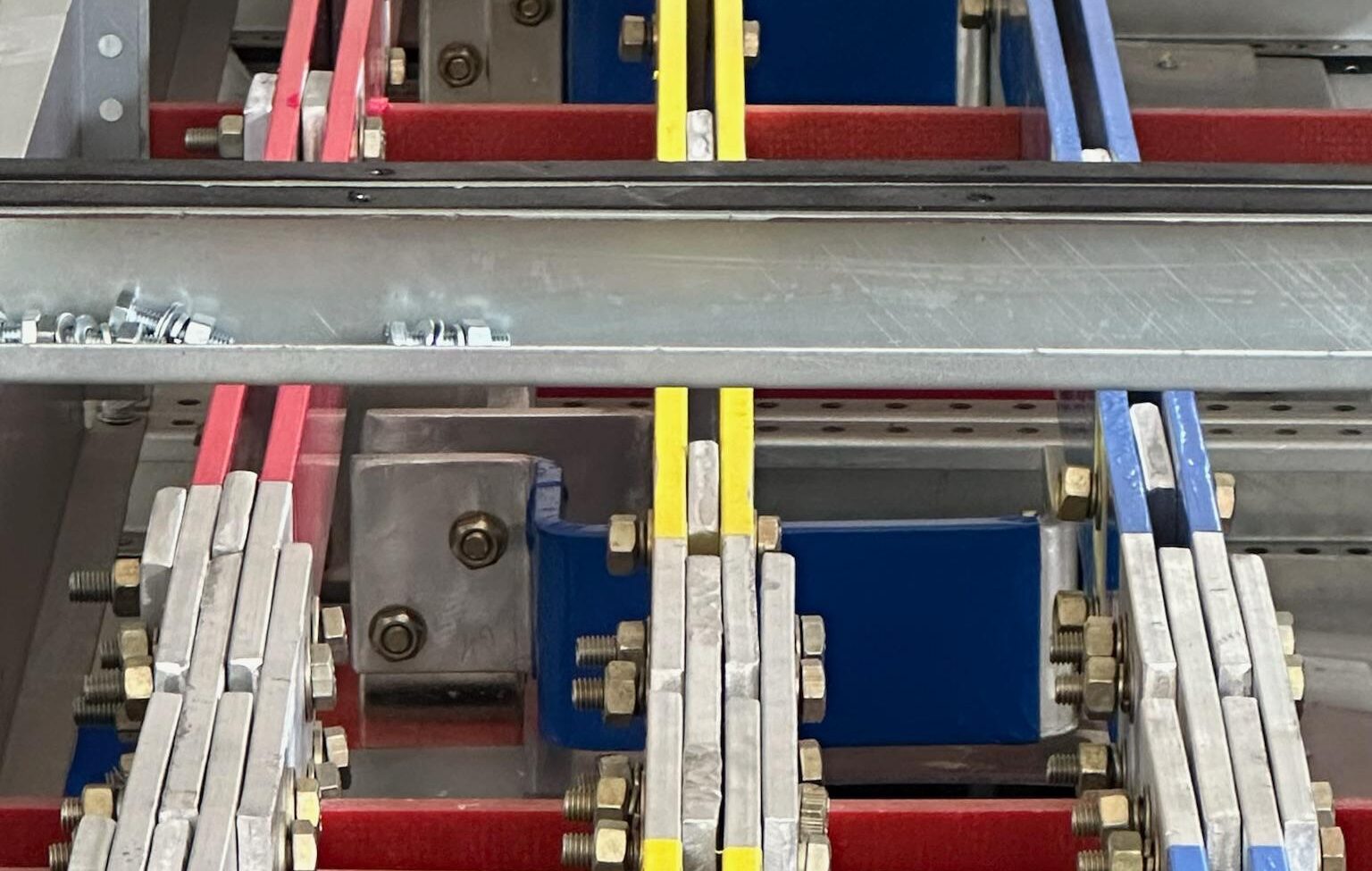
Choosing between drawout (withdrawable) and fixed MCC panels impacts uptime, safety, and maintenance costs. Use drawout where rapid isolation and replacement matter; use fixed where loads are stable and budget is tight. Many plants deploy a hybrid—critical feeders on drawout, utilities on fixed.
What is an MCC?
A Motor Control Center (MCC) houses feeders for motors (DOL, star-delta, soft starters, VFD feeders), protections, and control.
- Drawout MCC: Feeder modules slide out on rails; interlocks allow safe isolation and quick replacement.
- Fixed MCC: Feeder components are bolted in place; isolation requires shutdown of the feeder (and sometimes the section).
Primary keywords: drawout MCC, withdrawable MCC, fixed MCC, motor control center, IEC 61439, form of separation.
Quick Compare
Drawout (Withdrawable) MCC
- Pros: Minimal MTTR, safer maintenance, interchangeable feeders, easier expansions, excellent for critical lines.
- Cons: Higher CapEx, slightly deeper cubicles, requires disciplined spare management.
- Use when: High uptime targets, frequent maintenance, production-critical motors, regulated environments.
Fixed MCC
- Pros: Lower CapEx, simple design, rugged in harsh environments.
- Cons: Longer downtime to service, limited interchangeability, more wiring effort for changes.
- Use when: Loads are stable, planned shutdowns are acceptable, budget is tight.
Selection Guide (think “scorecard”)
Score each item 1–5 (5 = very important). If total ≥ 24 → Drawout. If ≤ 16 → Fixed. Between 17–23 → Hybrid.
- Uptime requirement (SLA / production loss cost)
- Maintenance frequency (filters, bearings, overloads)
- Safety & arc-flash risk (energy available at bus)
- Change rate (add/move motors, upgrades)
- Operator skill & spares management maturity
- Space constraints (depth/width, front access only?)
- Budget (CapEx vs lifetime OpEx)
Safety & Compliance (must-haves)
- Standards: Design and routine tests aligned to applicable IEC 61439 / IS equivalents.
- Form of separation: For high uptime and safety, consider Form 3b or 4b (segregated busbars/functional units).
- Interlocks: Shutter mechanisms on drawout, door interlocks, padlocking, mechanical and electrical interlocks for source/transfer.
- Arc-flash practices: Proper CT/PT placement, protection coordination, labeling, and arc-mitigation options where justified.
- Documentation: Clear GA/wiring, feeder schedules, labels, and test reports (FAT/SAT).
Cost & Downtime Reality Check
- Typical CapEx delta: drawout can be +15–40% vs fixed (varies by rating, form, and OEM).
- MTTR example:
- Drawout feeder swap: 20–30 min (isolate → rack out → insert spare → test).
- Fixed feeder repair: 60–120 min or more (isolate section → safe access → repair/rewire).
If your line loss costs ₹1–3 lakh/hour, drawout often pays back quickly.
Hybrid MCC (best of both)
- Critical drives (crushers, kilns, prime conveyors, process pumps): Drawout
- Utilities (lighting, small fans, non-critical pumps): Fixed
- Keep 2–3 spare drawout buckets pre-wired to speed replacement.
Engineering Tips
- Use VFD feeders for variable-torque loads (pumps/fans) to save energy; coordinate with APFC at PCC to maintain PF.
- Consider condition monitoring (temp/vibration inputs) in iMCCs for predictive maintenance.
- Choose proper IP rating (dust/heat) and ensure panel ventilation.
- Validate fault levels, busbar sizing, and clearances early.
RFQ Checklist (copy into your tender)
- Bus rating & fault level (e.g., 4000A, 50 kA/1s)
- Form of separation (3b/4b) and IP rating
- Feeder list (DOL/star-delta/soft starter/VFD; kW, FLA)
- Drawout or fixed per feeder; any hybrid rules
- Protection & metering (MFM, comms: Modbus/Profinet/EtherNet/IP)
- Space & access (front only/back access; depth/height limits)
- Controls & interlocks (emergency stop, inter-section)
- Tests: FAT (I/O simulation), routine tests, SAT
- Docs: GA, SLD, wiring, BoM, as-built, O&M manuals
- Spares & AMC: spare buckets (if drawout), response times
FAQs
1) Is drawout always safer than fixed?
Both can be safe when designed well. Drawout typically reduces exposure during maintenance by allowing isolation and removal without live work.
2) Can I convert fixed feeders to drawout later?
Possible but expensive. If you expect frequent changes, specify drawout or plan hybrid sections now.
3) Do drawout buckets fit any position?
If designed that way, yes. Specify interchangeable buckets with common control wiring philosophy.
4) Will drawout affect panel size?
Expect greater depth and sometimes width. Verify clearances and access in your MCC room.
5) How do VFDs change the choice?
VFD feeders benefit from quick swap and better isolation—often pushing the decision toward drawout for critical drives.